Palmarosa oil is a botanical ingredient used in the fragrance, cosmetic and personal care industries. Its sweet, floral scent has made it a useful choice for manufacturers developing soaps, skincare products, perfumes and other scented formulations. Beyond its fragrance, the oil is also valued for its naturally occurring aromatic compounds, which contribute to its distinctive character.
For Nepal, palmarosa is relevant to the wider medicinal and aromatic plants sector, where cultivation, essential oil processing and quality control all play a role in supplying botanical ingredients to different markets. Understanding the plant and the oil helps buyers and manufacturers make informed decisions about its applications, quality and sourcing.
Botanical Description of Palmarosa:
Palmarosa, scientifically known as Cymbopogon martinii, is a perennial aromatic grass belonging to the Poaceae family. It is cultivated for its fragrant above-ground parts, which are used to produce essential oil.
Palmarosa (Cymbopogon martinii) is a perennial aromatic grass of the family Poaceae and is cultivated extensively for its essential oil of high economic value. Native to the Indian subcontinent and other tropical locations, this aromatic grass is known for the sweet, floral fragrance similar to rose and is a popular element in aromatherapy, cosmetics, perfumes, and personal care products. The plant produces dense clumps of upright stems and will grow 1.8 to 3 m tall depending upon the climate and cultural traditions.
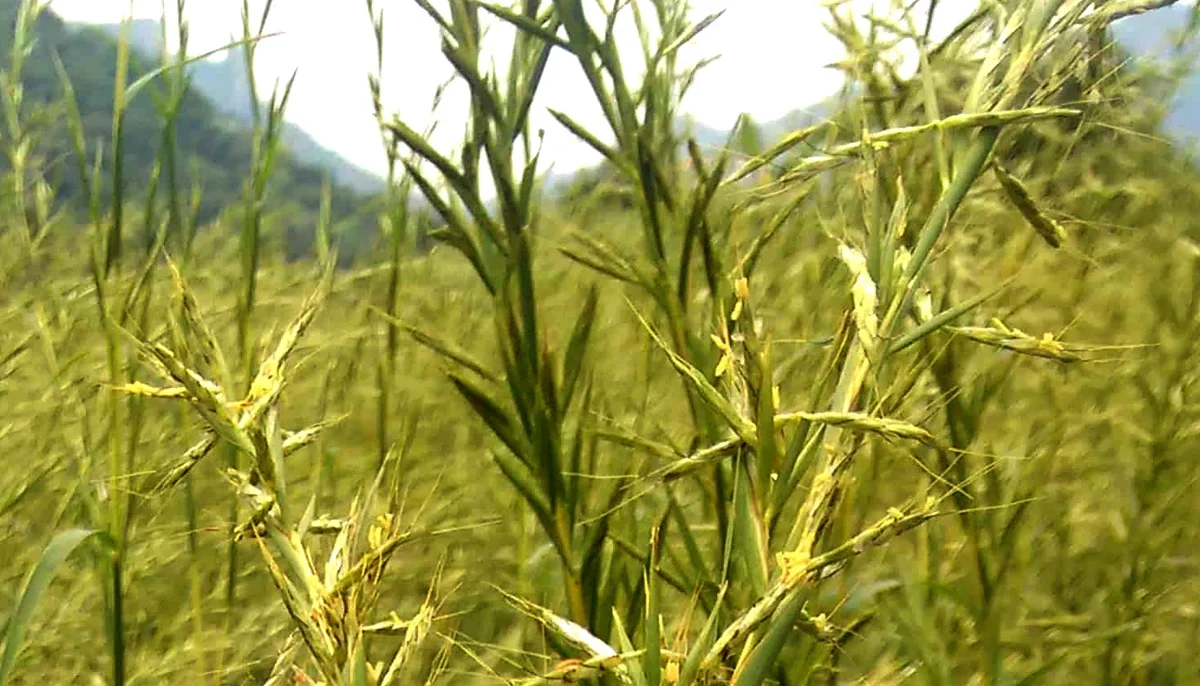
The leaves of palmarosa are long, thin, and green with a unique grass-like look. The blooming heads of the plant are branching and have little spikelets that develop lovely reddish-brown tones as they mature through the plant’s growth cycle. Palmarosa flourishes in tropical and subtropical growing regions, where it may grow in warm conditions with enough sunlight and well-drained soil.
Palmarosa essential oil is produced by collecting the aboveground portions of the plant (including the leaves and flowering tops) and processing them by steam distillation. In particular, the oil is prized for its high content of geraniol, a naturally occurring aromatic molecule that accounts for most of its pleasing floral perfume. The amount of geraniol may differ according to the variety of plant, maturity, growing conditions, and processing procedures.
Palmarosa is a major botanical crop for the essential oil industry due to its aromatic profile and wide range of applications. The essential oil obtained from Cymbopogon martinii is naturally fragrant and is widely utilized in perfumery, cosmetics, soaps, haircare products, and wellness applications, making it one of the most sought-after aromatic grasses worldwide.
What Is Palmarosa Essential Oil ?
Palmarosa essential oil is a concentrated aromatic liquid extracted from palmarosa grass, usually through steam distillation. During this process, steam passes through the plant material and carries its volatile aromatic compounds. The vapour is then cooled, allowing the essential oil to separate from the condensed water.
The resulting oil has a sweet, floral and rose-like aroma, often accompanied by fresh, green or grassy notes. This fragrance makes it useful in products where a floral character is desired without relying exclusively on traditional rose-derived ingredients.
Palmarosa oil is particularly associated with geraniol, a naturally occurring aromatic alcohol also found in other essential oils. Geranyl acetate and other volatile compounds may also contribute to its fragrance. The precise composition depends on the plant material, cultivation conditions, harvest timing and distillation process.
How Is Palmarosa Essential Oil Extracted?
Steam distillation is a common method used to obtain palmarosa essential oil. The quality of the final oil depends not only on the extraction process but also on how the grass is grown, harvested, handled and prepared.
The process begins with harvesting the grass at a suitable stage of maturity. The plant material may then be chopped or prepared to help steam pass through it more evenly. During distillation, steam releases the volatile aromatic compounds, which travel through the equipment before being cooled into a mixture of water and oil.
Once condensation is complete, the oil is separated from the water and collected. The finished oil can then be assessed for its aroma, appearance and chemical composition. Depending on the intended market, additional testing may be required to confirm its identity and suitability for use.
After processing, the oil should be stored in appropriate, tightly sealed containers away from direct sunlight and excessive heat. Proper handling helps preserve its quality during storage and transport.
Aroma and Chemical Composition of Palmarosa Oil :
Palmarosa essential oil is recognised for its sweet, floral fragrance, which resembles rose while retaining a fresh, grassy character. This makes it a useful ingredient in fragrance development, particularly in blends that require a floral note balanced with citrus, herbal or woody aromas.
Geraniol is generally the major constituent of palmarosa oil and contributes significantly to its characteristic scent. Geranyl acetate and other naturally occurring volatile compounds may also be present in varying amounts.
The chemical profile is not identical in every batch. Plant variety, growing conditions, harvest maturity, plant handling and distillation practices can influence the composition of the final oil. For manufacturers, a batch-specific chemical analysis is therefore more informative than assuming that all palmarosa oils have the same constituent levels.
Benefits of Palmarosa Oil :
Palmarosa oil is valued for its fragrance and its role in cosmetic and personal care formulations. Although research has examined some of its chemical constituents and biological properties, it is important to distinguish laboratory findings from benefits demonstrated in human studies.
Provides a Floral Fragrance
Palmarosa oil has a sweet, rose-like scent with fresh, grassy notes. It can contribute a distinctive floral character to soaps, lotions, body washes and other scented products.
Useful in Cosmetic Formulations
The oil can be incorporated as a fragrance ingredient in creams, body oils and other cosmetic products. Its suitability depends on the formulation, concentration and safety assessment of the finished product.
Contains Naturally Occurring Geraniol
Geraniol is an important aromatic constituent of palmarosa oil. It contributes to the oil’s fragrance and is of interest to fragrance and cosmetic manufacturers.
Offers Flexibility in Fragrance Blending
Palmarosa oil can be blended with citrus, woody, herbal and other floral aromatic materials. This allows formulators to develop different fragrance profiles for personal care and fragrance products.
Has Potential Antimicrobial Activity in Laboratory Research
Some laboratory studies have investigated the antimicrobial activity of palmarosa oil and its constituents. However, these findings do not establish that the oil can treat infections or replace approved medical products. More evidence is needed to establish its effectiveness for specific applications in people.
Provides a Plant-Derived Fragrance Ingredient
For manufacturers interested in botanical ingredients, palmarosa oil offers a plant-derived option for fragrance development. Its suitability still depends on the oil’s quality, composition and intended application.
Uses of Palmarosa Essential Oil :
Palmarosa essential oil is used in several industries, especially where a sweet, floral fragrance is desirable. Its application depends on the intended product, formulation requirements and applicable safety standards.
Skincare Products
Palmarosa oil is used as a fragrance ingredient in creams, lotions, body oils and other skincare products. It can complement formulations featuring floral or botanical scents. Manufacturers should determine an appropriate concentration and assess the finished product for skin compatibility.
Soap and Body Wash
The oil can add a floral, rose-like scent to handmade soaps, liquid soaps, shower gels and body washes. It may be blended with other aromatic ingredients to develop a more complex fragrance.
Perfumes and Fragrance Blends
Palmarosa oil is used in perfumery because of its floral aroma and geraniol content. It can contribute to floral accords and work alongside citrus, woody, herbal and other fragrance materials.
Hair Care Products
Shampoos, conditioners, hair oils and other hair care products may contain palmarosa oil as a fragrance ingredient. Any additional claims about hair growth, dandruff or scalp health should be supported by appropriate scientific evidence.
Bath and Body Products
Bath oils, body washes and other scented bath products may use palmarosa oil to create a fresh, floral fragrance. Its concentration should be appropriate for the product type and intended exposure.
Home Fragrance Products
Depending on the formulation, palmarosa oil may be used in room fragrance blends and other aromatic home care products. Product developers should consider the intended exposure, ventilation and safety requirements.
Cosmetic Ingredient Manufacturing
Manufacturers may purchase palmarosa essential oil as a raw material for developing botanical-based personal care and fragrance products. Consistent specifications, suitable packaging and reliable documentation are important when incorporating the oil into commercial production.
Safety Precautions for Palmarosa Essential Oil :
Palmarosa essential oil is derived from a plant, but it is still a concentrated aromatic substance. Its safety depends on the concentration, route of exposure, formulation and individual sensitivity. Proper handling is important for both personal use and commercial manufacturing.
Avoid Applying Undiluted Oil Directly to the Skin
Undiluted palmarosa oil may cause irritation or sensitisation. It should be used in a properly formulated product or diluted according to reliable safety guidance for the intended application.
Check Skin Compatibility
Before using a new product containing palmarosa oil, test a small amount of the properly diluted or finished formulation on a limited area of skin. Stop using it if redness, itching, burning or other signs of irritation develop. A small-area test cannot guarantee that an allergic reaction will not occur.
Avoid Contact with Eyes and Sensitive Areas
Keep the oil away from the eyes, mucous membranes and other sensitive areas. If it enters the eyes, rinse thoroughly with clean water and seek medical advice if irritation persists.
Do Not Ingest Without Qualified Medical Guidance
Essential oils are concentrated materials and are not automatically safe for consumption. Do not ingest palmarosa essential oil unless its use has been specifically assessed and directed by an appropriately qualified healthcare professional.
Seek Advice During Pregnancy and Breastfeeding
Safety information for many essential oils during pregnancy and breastfeeding is limited. Seek advice from a qualified healthcare professional before using palmarosa oil during these periods, particularly for topical or inhalation applications.
Keep Away from Children and Pets
Store the oil securely out of the reach of children and pets. Concentrated essential oils can be harmful if swallowed or used incorrectly, and safe exposure levels vary according to the species and application.
Store the Oil Properly
Keep palmarosa oil in a tightly closed, compatible container away from direct sunlight, excessive heat and moisture. Follow the supplier’s storage recommendations to help maintain its quality.
Follow Cosmetic and Formulation Safety Requirements
Manufacturers should review the relevant safety data sheet, certificate of analysis and applicable cosmetic or fragrance safety requirements before using the oil. The finished product should be assessed for its intended application and destination market.
Stop Use if Irritation Occurs
If a product containing palmarosa oil causes persistent redness, itching, swelling or discomfort, discontinue use. Seek medical advice if symptoms are severe or do not improve.
Important:
Palmarosa essential oil is a concentrated aromatic ingredient, not a substitute for medical treatment. Its safety should be evaluated according to how it is formulated and used.
Palmarosa Essential Oil in Nepal :
Nepal has a diverse medicinal and aromatic plants sector that includes cultivated aromatic crops, essential oil processing and the trade of botanical raw materials. Palmarosa is relevant to this sector as a cultivated aromatic grass, although its cultivation and commercial production should be distinguished from the collection of wild Himalayan plants.
From Nepal’s perspective, the production of palmarosa oil involves more than growing the grass. Harvesting, plant handling, distillation, quality control, packaging and access to reliable buyers all influence the commercial value of the final product.
For a Nepal-based botanical ingredient supplier, documenting the actual origin of the oil is particularly important. Buyers may want to know where the grass was cultivated, where it was distilled, which extraction method was used and whether the batch has supporting quality documentation.
Palmarosa should not automatically be described as a high-altitude Himalayan plant. It is a warm-climate grass, and its cultivation requirements differ from those of many aromatic plants associated with Nepal’s higher mountain regions.
Local Cultivation and Processing
Palmarosa provides an example of how cultivated aromatic plants can contribute to Nepal’s botanical ingredient supply chain. Opportunities for local production depend on suitable growing conditions, planting material, distillation facilities and access to consistent markets.
Harvesting at the appropriate stage and handling the grass correctly can influence the oil’s aroma and composition. Suitable distillation equipment and reliable quality testing are also important when supplying manufacturers that require consistent raw materials.
The commercial value of palmarosa oil depends on more than the quantity produced. Buyers also consider its botanical identity, chemical composition, aroma, batch consistency and traceability.
Rural Livelihoods and Responsible Sourcing
Aromatic plant production can create opportunities for farmers, distillers, processors and traders when there is a dependable market for the resulting oil. In Nepal, responsible development of this sector involves suitable cultivation practices, fair purchasing arrangements and attention to the long-term interests of the people involved in production.
Claims about increased farmer income, employment or environmental benefits should be supported by actual sourcing information. These outcomes should not be assumed simply because an ingredient is plant-derived.
For businesses working with Nepalese botanical ingredients, transparent information about the source of the raw material and the processing methods used helps buyers understand the supply chain and make informed purchasing decisions.
Export Quality and Traceability
International buyers often require more than a product name and a fragrance description. Depending on their application and destination market, they may request a technical data sheet, safety data sheet, certificate of analysis, batch identification and other relevant regulatory documentation.
For palmarosa oil, gas chromatography and mass spectrometry, commonly known as GC-MS, may be used to examine the oil’s volatile constituents. Such analysis can help buyers assess the chemical profile of a particular batch.
Traceability is equally important. Suppliers should communicate the documented country of origin, extraction method and other relevant product details accurately. If the oil is produced in Nepal, that claim should be supported by the supplier’s records.
How to Choose the Right Palmarosa Oil :
Choosing palmarosa oil involves considering the intended application, quality requirements and reliability of the supplier. An oil suitable for one formulation may not automatically meet the needs of another, so buyers should review its specifications before purchasing.
Botanical identity and origin
Confirm that the oil is identified as Cymbopogon martinii and verify whether it was cultivated and distilled in Nepal or sourced from another country.
Extraction method
Check how the oil was obtained and which plant parts were processed. Steam distillation is a common method for palmarosa essential oil.
Chemical composition
Review the certificate of analysis or GC-MS report when required. The geraniol content and other constituents should be evaluated against the buyer’s specification rather than assumed to be identical across all batches.
Aroma and appearance
Assess whether the fragrance profile and appearance are suitable for the intended formulation. Sensory evaluation should complement, not replace, appropriate analytical testing.
Batch consistency
Ask about batch identification, quality control procedures and the supplier’s ability to provide consistent material for repeat orders.
Packaging and storage
Confirm that the packaging is suitable for the order size, transport conditions and expected storage period.
Documentation and supply capacity
Request the technical and safety documents needed for the intended application, and confirm available quantities, lead times and repeat-order capacity.
These checks help importers, cosmetic manufacturers, fragrance houses and other businesses evaluate whether a particular palmarosa essential oil meets their requirements.
Why Source Palmarosa Oil from National Organics ?
At National Organics, we work with botanical ingredients for businesses seeking plant-derived materials for manufacturing and formulation. Our approach focuses on clear product information, responsible sourcing practices and the documentation needed to support informed purchasing decisions.
For businesses interested in palmarosa oil, the key details to establish include the confirmed origin of the oil, its extraction method, available specifications and the quantity required. These details help determine whether the supplied material is appropriate for the intended application.
Businesses looking for bulk palmarosa essential oil can contact National Organics to enquire about availability, packaging options and relevant technical documentation. Product-specific details should be confirmed before an order is placed so that buyers can evaluate the oil against their own requirements.
Conclusion :
Palmarosa oil has a useful place in the fragrance and personal care industries because of its sweet, floral aroma and naturally occurring geraniol content. It can be used in soaps, cosmetics, perfumes and other scented products when formulated appropriately.
For Nepal, palmarosa also provides an opportunity to connect aromatic plant cultivation with essential oil processing and the wider botanical ingredient market. Making the most of this opportunity requires suitable cultivation and processing practices, accurate origin information, reliable quality checks and responsible relationships throughout the supply chain.
Whether a business is developing a new fragrance, sourcing ingredients for personal care products or comparing essential oils for commercial use, understanding the botanical identity, composition, safety requirements and origin of palmarosa oil is a practical starting point.